If you received the COVID-19 vaccine within the last 14 days you are asked to wait to received the Hepatitis A vaccine. The incubation period of hepatitis A is usually 1428 days.
 Pin On Health
The virus is usually spread by person-to-person contact or through food and liquid contaminated with the virus.

Hepatitis a vaccine symptoms. You can and probably should get a vaccine to prevent this condition. If you get hepatitis A as an adult you are more likely to have signs and symptoms than young children who are infected. You can protect yourself from hepatitis A by getting the hepatitis A vaccine.
Symptoms include flu-like symptoms and yellowing of your skin and the whites of your eyes jaundice which then gradually clear without treatment. Not everyone who is infected will have all of the symptoms. Theres currently no cure for hepatitis A.
Find out more about the hepatitis A vaccine. What are the symptoms of hepatitis A. Symptoms may last less than two months and include.
The HAV vaccine can prevent hepatitis A. But it usually gets better on its own within a couple of months. Most reactions are harmless and do not last long.
Hepatitis A formerly called infectious hepatitis causes your liver to become inflamed. Symptoms of hepatitis A range from mild to severe and can include fever malaise loss of appetite diarrhea nausea abdominal discomfort dark-coloured urine and jaundice a yellowing of the skin and whites of the eyes. The vaccine is an injection that helps protect your child from the virus that causes hepatitis A.
Children under the age of 6 typically show no symptoms when they contract the virus. This shot is routine for infants between the ages of 12 and 23 months. A jaundice or elevated total bilirubin levels 30 mgdL OR.
Doctors give the hepatitis A vaccine in two shots. Charles Patrick Davis MD PhD. Hepatitis A signs and symptoms typically dont appear until youve had the virus for a few weeks.
The virus can spread by sexual contact or the fecal-oral route. Some people have no symptoms at all. No serious side effects have been reported from the hepatitis A vaccine.
Hepatitis A is caused by a virus which is spread predominately through the fecal-oral route when small amounts of infected fecal matter are inadvertently ingested. If you do hepatitis signs and symptoms can include. As with any medicine there is always a small risk that a serious problem could occur after someone gets the vaccine.
People at higher risk to be infected with hepatitis A virus include those who use illegal drugs men who have sex with men people who. Vaccines and vaccine schedules depend on the type of hepatitis. Abdominal pain or discomfort especially on the upper right side beneath your lower ribs by your liver.
Sudden nausea and vomiting. Other problems may occur by chance and are not related to the vaccine for example a cold gastroenteritis or a headache. It is relatively uncommon since a vaccine became available.
Hepatitis A is a serious liver disease. Infected individuals shed large amounts of the virus in their stool starting about two weeks before symptoms present and continue shedding the virus in their stool for one to three months. Soreness at the injection site is the most common side effect reported.
People who are more likely to be infected and people with chronic liver disease should also receive the vaccine. Yes the hepatitis A vaccine is safe. Some symptoms may be caused by the vaccine for example redness at the injection site.
Hepatitis A facts medical author. While youre ill its a good. Symptoms may include fever and joint pain.
The hepatitis A vaccine is usually available for free on the NHS for anyone who needs it. Some people especially many children dont have symptoms. An acute illness with a discrete onset of any sign or symptom consistent with acute viral hepatitis eg fever headache malaise anorexia nausea vomiting diarrhea abdominal pain or dark urine AND.
Treatments for hepatitis A. Symptoms include fever abdominal pain fatigue nausea and vomiting. You can usually look after yourself at home.
Hepatitis A is an inflammatory disease of the liver caused by a virus. Older children teens and adults usually develop mild symptoms which can. Hepatitis A vaccine is safe.
Infection with hepatitis A virus can cause an unpleasant illness but most people fully recover. Less common symptoms that can occur include feeling dizzy fainting or shoulder pain that lasts longer than normal after a vaccine. But not everyone with hepatitis A develops them.
All children should receive the hepatitis A vaccine between 12 and 23 months of age. Hepatitis A viruses cause the disease termed hepatitis A. If you have this infection the virus is causing inflammation in your liver.
Severe allergic reaction to a vaccine occurs. Fulminant hepatitis is uncommon and caused approximately 100 deaths each year in the United States in the pre-vaccine era1 17 18 The risk is increased if there is underlying liver disease.
636 months after 1st dose. Since the side effects of the hepatitis C vaccine have not been widely studied it is safe to assume that additional symptoms will appear as more people are given the.
 Pin On Std In United States
Day 0 day of vaccination 2nd dose.

Hepatitis c vaccine schedule. Prior to 1992 blood transfusion was a risk for contracting hepatitis C infection. Some of these vaccines developed mainly in the past decade have undergone limited testing in people. The hepatitis B vaccine is an injection or shot that is generally given in the arm and as a three-dose series.
A hepatitis C vaccine a vaccine capable of protecting against the hepatitis C virus HCV is not yet available. 1st Shot At any given time. But with modern treatments its usually possible to cure the infection and most people with it will have a normal life expectancy.
Babies born to women. Efforts to develop a hepatitis C vaccine started more than 30 years ago when the hepatitis C virus was identified. Currently theres no vaccine to prevent hepatitis C.
Find immunization schedules for all ages below as well as a list of vaccines recommended for adults in BC. Tetanus diphtheria pertussis Tdap or Td 1 dose Tdap each pregnancy. One dose of monovalent HA vaccine should be given for primary immunization with a booster dose given at least 6 to 36 months later depending on the product.
All vaccines included in the adult immunization schedule except pneumococcal 23-valent polysaccharide PPSV23 and zoster RZV vaccines are covered by the. 3rd Shot Between 21 and 30 days after the 1st shot. Vaccine 19-26 years 27-49 years 50-64 years 65 years.
International Hepatitis B Vaccine Schedules Please note that the first dose should be given as soon as possible. No vaccine is currently available but several vaccines are currently under development. 2nd Shot 7 days after the first shot.
However several vaccine doses are required to induce long-term protection. If you must complete an accelerated schedule four doses of the vaccine are required in order to achieve full long-term immunity. This paper aims to review the use of accelerated hepatitis B vaccination schedules in terms of immunogenicity and compliance.
The schedules can be viewed online or can be downloaded and printed. Children should get their first dose at birth and complete the series by age 6 months. Hepatitis C is a virus that can infect the liver.
Routine Immunization Schedules BC Routine Immunization Schedule - INFANTS CHILDREN BC Routine Immunization Schedule - SCHOOL AGE BC Routine Immunization Schedule - ADULTS 18 YEARS OF AGE AND OLDER. Influenza live attenuated LAIV4 1 dose annually. Hepatitis B and C are blood-borne infections while hepatitis A is easier to catch but less serious.
From time to time the vaccination doses and timings change in Jersey as in the UK to reflect updated evidence and national guidance. Expanded Programme on Immunisation EPI aims to vaccinate children aged 0-15 months against ten Vaccine Preventable Diseases VPDs and pregnant women. Day 0 day of vaccination 2nd dose.
Babies and children are still protected against MenC disease through the HibMenC vaccine and the MenACWY vaccine but the single MenC vaccine is no longer. The table below shows the vaccines and the diseases you or your child will be protected against that are routinely offered in Jersey and the ages at which they should ideally be given. Vaccines and vaccine schedules depend on the type of hepatitis.
Although vaccines exist for hepatitis A and hepatitis B development of an HCV vaccine has presented challenges. 4th Shot 1 year after the first shot. However you can reduce your chances of contracting the virus through preventive measures.
Hepatitis C virus and hepatitis B can make an infected person very sick and they are risk factors for liver cancer liver disease liver failure and liver damage. Hepatitis C vaccine side effects have included pain and tenderness at the injection site. If left untreated it can sometimes cause serious and potentially life-threatening damage to the liver over many years.
Day 0 day of vaccination 2nd dose. The HAV vaccine can prevent hepatitis A. These are usually mild and last a day or less.
Influenza inactivated IIV or Influenza recombinant RIV4 1 dose annually. If you have hepatitis C it can be treated and. 636 months after 1st dose.
This shot is routine for infants between the ages of 12 and 23 months. Redness may also occur in some people. Several at-risk groups have difficulties in adhering to the standard vaccination schedule.
Since then researchers have studied several potential vaccines in animals. Most vaccines work through inducing an antibody response that targets the outer. Additional doses require minimum time intervals between doses in order for the vaccine to be effective.
636 months after 1st dose. - Chronic liver disease eg persons with hepatitis C cirrhosis fatty liver disease alcoholic liver disease autoimmune hepatitis alanine aminotransferase ALT or. This vaccine gives protection against meningococcal disease a major cause of meningitis caused by group C Neisseria meningitidis bacteria.
The single MenC vaccine was in the routine UK immunisation schedule from 1999 until July 2016. Refer to Table 1. Usually the baby would get a second dose at 1 month old and the third dose at 6 months.
1 dose TdTdap for wound management.
Use recommended doses of above on a 0 1 and 6 month schedule OR a 0 1 2 and 12 month schedule. These babies often suffer serious long-term illnesses from the disease.
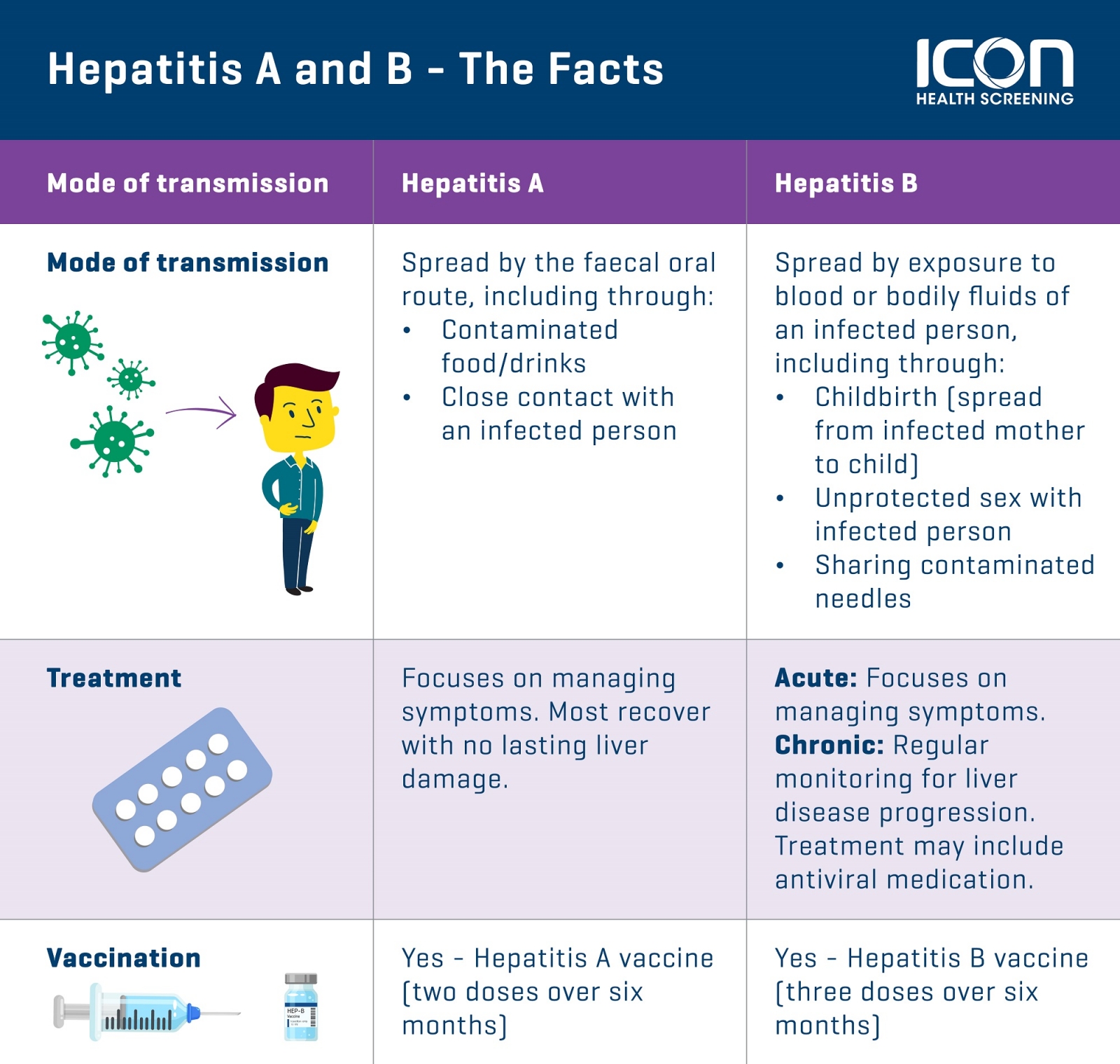 What Is Hepatitis B Icon Health Screening
Pregnant women who have hepatitis B infection or are carriers of hepatitis B virus can give the disease to their babies when they are born.
Hepatitis b vaccine how often. Hepatitis B is a contagious liver infection. The hepatitis B vaccine is also known as the first anti-cancer vaccine because it prevents hepatitis B the leading cause of liver cancer worldwide. In healthy people routine immunization results in more than 95 of.
They will also be tested for hepatitis B infection at this time. These are given at 0 1 and 6 months. Infants should get their first dose of hepatitis B vaccine at birth and will usually complete the series at 6 months of age sometimes it will take longer than 6 months to complete the series.
The hepatitis B vaccine is recommended for all children and any adult at an increased risk for getting the hepatitis B virus. A blood test will also be taken 2 months after the full course of immunisation to make certain that the immunisation has been effective. Infants should get their first dose of hepatitis B vaccine at birth and will usually complete the series at 6 months of age sometimes it will take longer than 6 months to complete the series.
If you need hepatitis A vaccination in addition to hepatitis B you can do these individually or as a combined vaccine that covers both. Hepatitis B vaccine is usually given as 2 3 or 4 shots. A second dose of the vaccine is recommended at least six months after the first dose to provide prolonged protection.
There is also a combination vaccine for both hepatitis A and B called Twinrix which is given in three doses over six. Because hepatitis B is often considered to be a sexually transmitted disease parents wonder why a newborn needs it. Three factors make hepatitis B a risk for anyone including newborns.
They should have another dose of the individual hepatitis B vaccine at 12 months of age. How often should I test health care workers after theyve received the hepatitis B vaccine series to make sure theyre protected. The traditional vaccine requires three doses over six months but a new one Heplisav-B approved in 2018 requires just two doses in one month and has been shown to yield a better antibody response in older adults.
Hepatitis B immunisation course consists of three doses of vaccine. Full protection involves having 3 injections of the hepatitis B vaccine at the recommended intervals. Hepatitis B vaccine is usually given as 2 3 or 4 shots.
The vaccine can prevent. The World Health Organization recommends all infants receive the first dose of the hepatitis B vaccine within 24 hours of birth often called the birth dose and to complete the vaccine series with additional shots at 1 month and 6 months of age. The vaccine is given in to the muscle at the top of the arm.
The hepatitis B vaccine is the mainstay of hepatitis B prevention. The hepatitis B vaccine is usually given in 3 to 4 doses over 6 months. When hepatitis B vaccine is administered as part of a combination vaccine contraindications to other vaccines should be checked.
They should be given another dose of the individual vaccine at 4 weeks and then follow the routine UK schedule three doses of the 6-in-1 vaccine at 2 months 3 months and 4 months of age. If adequate anti-HBs is present 10mIUmL nothing more needs to be done. Hepatitis B vaccine is a vaccine that prevents hepatitis B.
The first dose is recommended within 24 hours of birth with either two or three more doses given after that. If your babys mother has hepatitis B your baby will get the vaccine within 12 hours of birth. Hepatitis B for Patients The vaccination for hepatitis B is given as 3 injections over a 6-month period--an initial dose followed by a second dose 1 month later and a third dose 5 months after the second.
Hepatitis B is transmitted through blood. Babies are routinely given a dose of the hepatitis B vaccine within 24 hours of birth. Immunization against hepatitis B disease is recommended for all newborn babies infants children and adolescents up to 19 years of age.
The hepatitis B vaccine is recommended for all infants at birth for children up to age 18 and adults at high risk. Babies born to mothers with hepatitis B infection will be given 6 doses of hepatitis B-containing vaccine to ensure long-lasting protection. Periodic testing or boosting is not needed.
Hepatitis B vaccine is recommended for most babies within 24 hours of birth. In most vaccine recipients antibodies start to develop immediately after the first dose but do not reach protective levels for 2 to 4 weeks. It is also recommended that health-care workers be vaccinated.
WHO recommends that all infants receive the hepatitis B vaccine as soon as possible after birth preferably within 24 hours followed by two or three doses of hepatitis B vaccine at least four weeks apart to complete the series. -Administer hepatitis B immune globulin if appropriate. Usual Adult Dose for Hepatitis B Prophylaxis.
Beginning the hepatitis B vaccine at birth will ensure protection against hepatitis B for life. The vaccination schedule most often used for children and adults is three intramuscular injections the second and third doses administered at 1 and 6 months respectively after the first dose. -Start hepatitis B vaccine as soon as possible after exposure.
This includes those with poor immune function such as from HIVAIDS and those born premature. Postvaccination testing should be done 12 months after the last dose of hepatitis B vaccine.


